
Begin with the plague of 1645, then a witchcraft trial in 1661 and the West Port murders of 1828. Along the way, look for the surviving rooms, a public memorial and museum objects that bring these histories into the present.
1645: plague spread through a crowded Old Town
In 1645, disease moved through the crowded homes of the Old Town. The city imposed quarantine measures and maintained a plague camp at Sciennes outside the old walls. These responses tell a more complicated story than the familiar legend that an entire close was simply sealed with everyone inside.
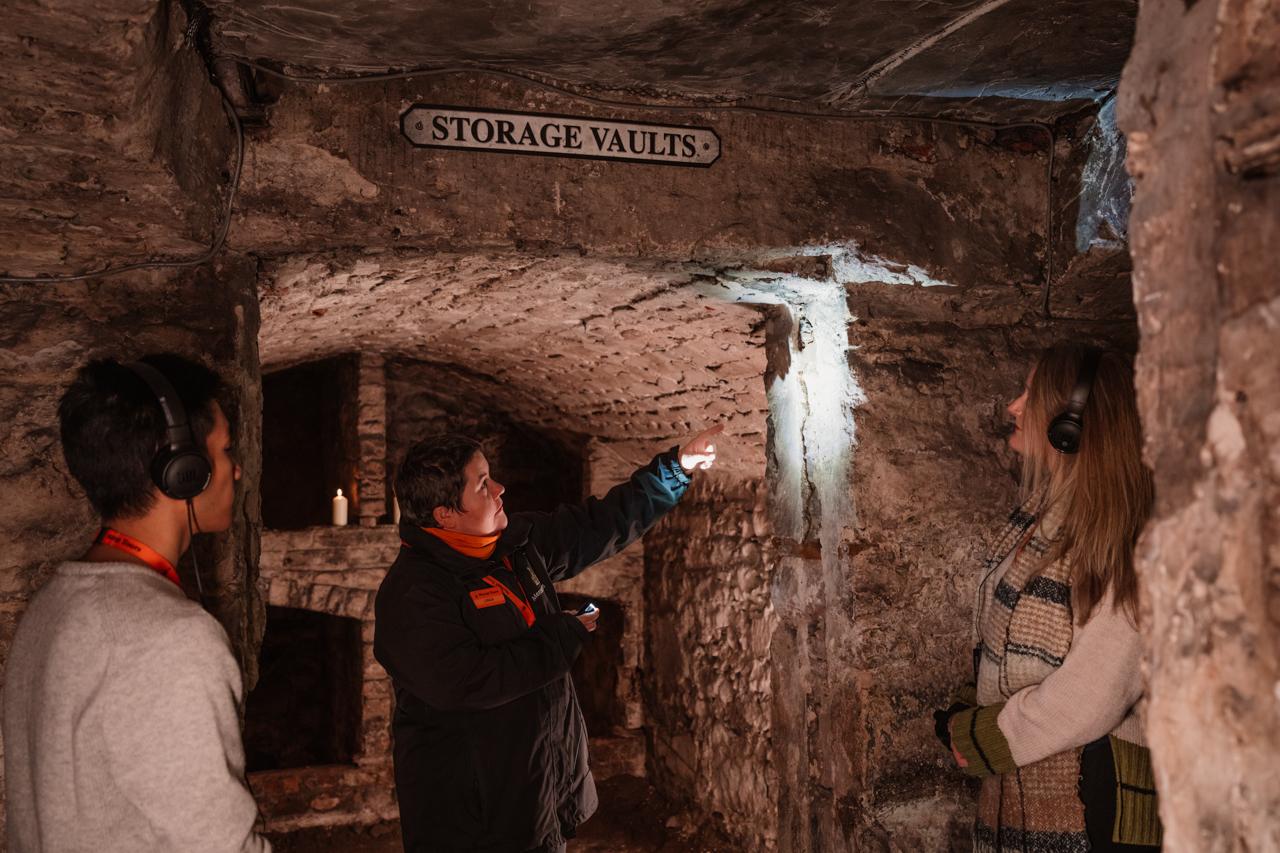
At the Real Mary King’s Close, surviving rooms and a steep lane give that crowded neighbourhood a physical scale. The character-led tour includes plague history as part of the residents’ lives. It is a separately ticketed visit, beneath the City Chambers.
1661: a name behind the witchcraft trials
Bessie Wilson was tried in Edinburgh on 7 August 1661. The University of Edinburgh’s Survey of Scottish Witchcraft records her conviction and execution at Gilmerton two days later.
The prosecutions took place under the Witchcraft Act of 1563, repealed in 1736. On Castlehill, the Witches’ Well commemorates the people persecuted. Look for the outdoor memorial near the castle esplanade; you do not need an underground-tour ticket to see it.

1828: Burke and Hare turned medical demand into murder
In 1828, William Burke and William Hare murdered 16 people and sold their bodies to anatomist Robert Knox. Demand from the anatomy schools made a human body valuable, and the pair turned that demand into murder. Their crimes were tied to lodgings around Tanner’s Close in the West Port.
Hare gave evidence against Burke, who was executed and publicly dissected in January 1829. At Surgeons’ Hall, Burke’s death mask and a pocketbook said to be made from his skin give the aftermath a disturbing physical presence. The museum visit is separate from a vault tour.
Where to follow these histories today
Find the Witches’ Well on Castlehill, then explore the West Port area associated with Burke and Hare. Greyfriars Kirkyard adds a burial-ground stop when open. Check the itinerary if you want to include any of these places in a guided walk.
For preserved homes and plague interpretation, book Mary King’s Close. For Burke-related objects and the anatomy trade, visit Surgeons’ Hall. Add a history-led vault tour to explore how South Bridge’s chambers fitted into the growing city; it shows a different part of the past.
Hear the history with a guide
Choose a history-led vault visit for South Bridge’s rooms and their uses, or a ghost walk when folklore is part of the evening you want.
Sources and updates
Material visitor facts were checked on 5 November 2026. Operational details can change, so verify the exact provider before booking.
Take a closer look at the city’s darker past
Visit the surviving close, see the objects at Surgeons’ Hall or join a storyteller underground. Choose the place that lets you follow the part of the history that interests you.
Compare Edinburgh underground tours